Russian Blue Film ^new^ Page
In the pantheon of film criticism, certain colors evoke specific emotional landscapes. “Russian Blue” — that cool, steely shade tinged with silver and shadow — is not merely a hue but a cinematic sensibility. It conjures images of snow-dusted St. Petersburg evenings, the glint of a samovar in a dimly lit room, the frost on a windowpane framing a face lost in longing. This write-up explores classic films that master the Russian Blue palette and offers vintage recommendations for those who crave cinema that is atmospheric, introspective, and visually poetic.
in Stuart Little is a prominent Russian Blue antagonist. Russian Blue Film
To explore this keyword comprehensively, we must look at it through three distinct lenses: In the pantheon of film criticism, certain colors
This icy-blue filter became shorthand for gritty Russian crime dramas, psychological thrillers, and arthouse projects. The visual color choice mirrors the freezing geographical climate and the complex emotional landscapes of the characters. 3. The Zoological Angle: Narrative and Short Indie Films Petersburg evenings, the glint of a samovar in
The breed is sometimes linked to Russian folklore as a healing charm and was reportedly a favorite of Russian Czars. Additionally, the character Tom from Tom and Jerry is frequently considered a Russian Blue. 3. Linguistic and Scientific "Russian Blues" Russian Blue Cat Competes For #1 Spot Of Worlds Best Cat
If your interest in "Russian Blue" is a stepping stone into broader Russian cinema—perhaps wondering if it relates to acclaimed Russian art-house features—there are many incredible titles to explore. For example:
Use a macro lens to capture the texture of the fur and the intricate patterns in their green irises. 5. Why the Russian Blue Remains a Favorite

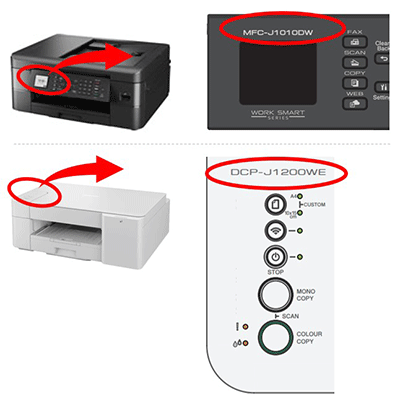
 Inkjet Printer / Fax / MFC / DCP
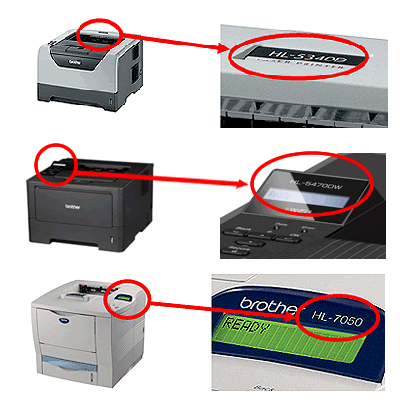
 Monochrome Laser Printer
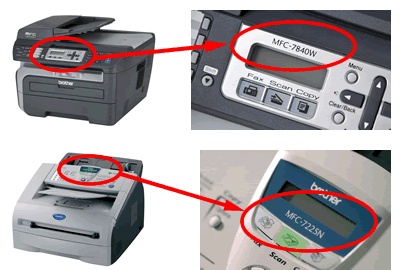
 Monochrome Laser Fax / MFC / DCP
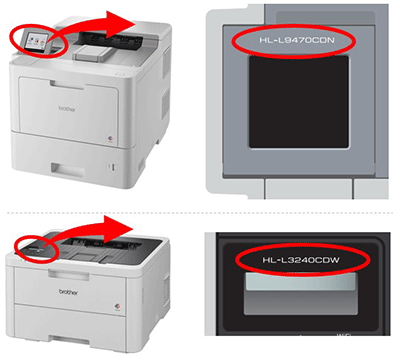
 Color Printer (Laser / LED)


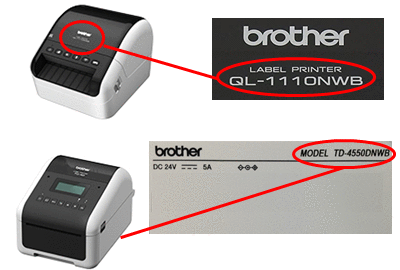
 Label Printer (QL/TD), Industrial Label Printer (TJ)
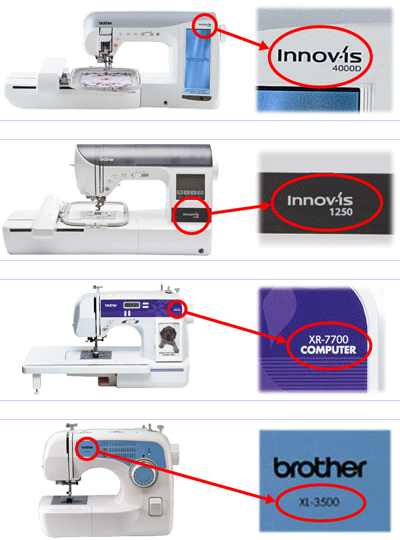
 Home Sewing Machine
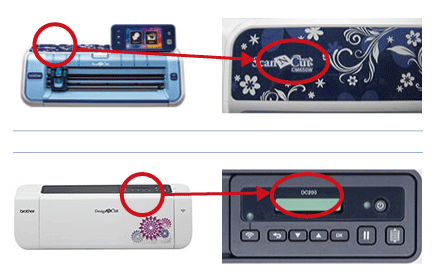
 Cutting Machine
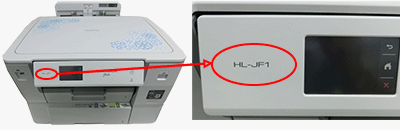
 Creative Printer (HL)