Sending a follow-up email just after the first one was opened increases your reply rate by 80%.
Add the famous read receipt in your Gmail
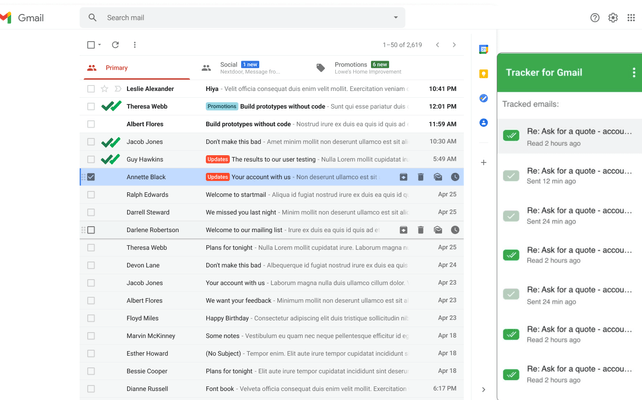


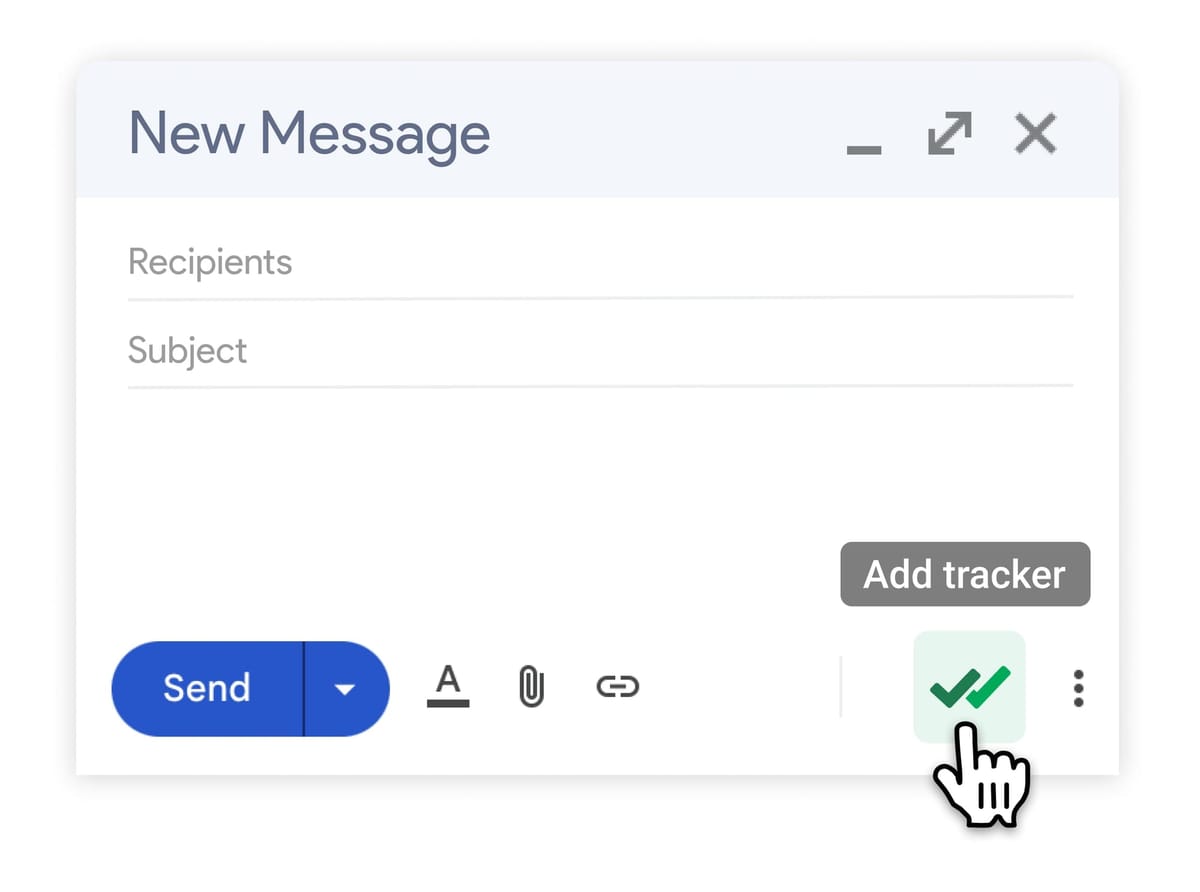

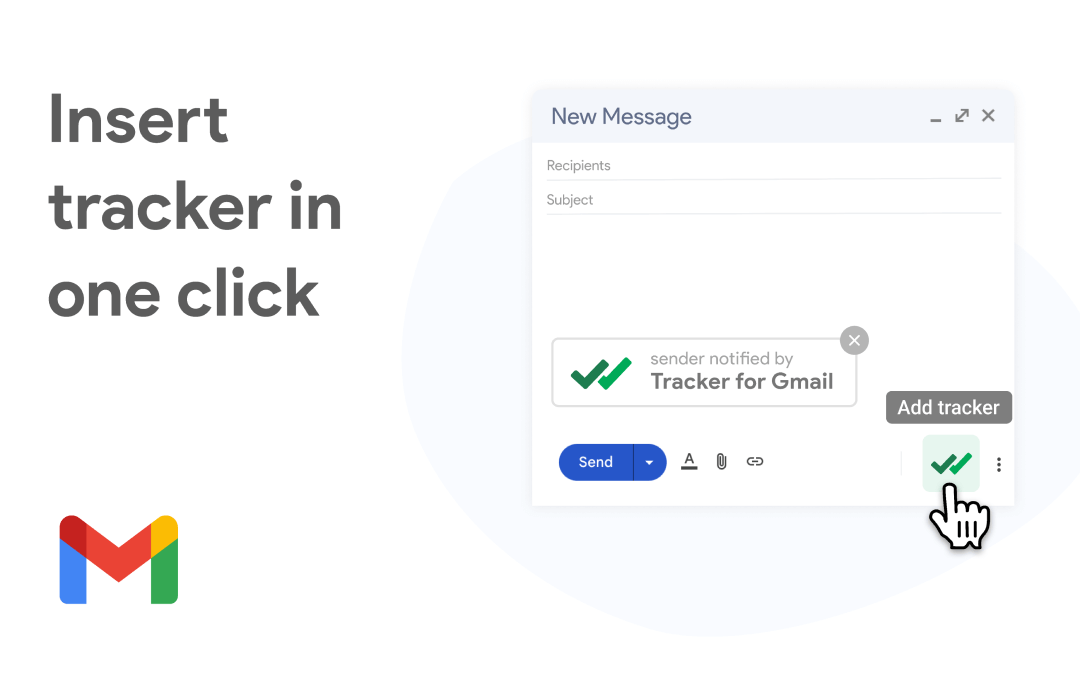
Receive an instant notification as soon as your email is opened
For each tracked email, get a list of all the time it was opened
Your privacy matters: we can’t read your emails. Learn more:
https://mailtrack.email/security
Companies and organizations from all over the world trust Mail Track for Gmail









See what your clients say about us
A cut above the rest of the email tracker for gmail software available. Super easy to use and a generous free plan. Plus, importantly, it doesn't request permission to read my emails.
One of the best email tracking to know when our important emails are opened.
Always know what you will pay
| Free | Premium | |
|---|---|---|
| $0$0 | $2.99$5.99 | |
| / month/ month | / user / month/ user / month | |
| Tracked emails per day | Unlimited | Unlimited |
| Track from mobile | ||
| Mail notifications | ||
| Remove Mail Track Branding | ||
| Real time notifications | ||
| Team Plan | ||
| Get startedGet started | Get startedGet started |
Pioneered by experts like Dr. Temple Grandin, livestock behavioral science has transformed the agricultural industry. Understanding how cattle, pigs, and sheep perceive their environment has led to the design of curved handling facilities that reduce fear and prevent herd panic.
Panic responses in dogs left alone, leading to self-trauma or destructive behavior.
3. Fear Free Practice: Revolutionizing the Veterinary Clinic
Conversely, the veterinary environment itself is a potent source of , which can actively undermine clinical care. The white coats, metallic sounds, unfamiliar smells, and restraint procedures of a clinic can be terrifying to an animal. A patient in a state of "fear-induced analgesia" (stress-induced numbness) may show few initial signs of pain, only to react violently when a threshold is crossed. More commonly, a fearful patient may freeze (appearing compliant but learning helplessness), pant excessively, or become aggressively defensive. This "fear aggression" is one of the leading causes of workplace injury for veterinary staff. The modern solution is the implementation of Low-Stress Handling and Fear-Free protocols, which are entirely rooted in behavioral science. Simple modifications—using non-slip mats, allowing an animal to hide its face, applying gentle pressure instead of restraint, and using high-value treats—can transform a traumatic visit into a tolerable, or even positive, experience. This not only protects the safety of the team but ensures that future veterinary care is not met with escalating resistance. videos de zoofilia que se practica en el peru work
What are you focusing on (e.g., companion pets, livestock, or wildlife)?
To modify animal behavior effectively, veterinary professionals and trainers rely on established scientific principles of learning theory.
Today, is a critical pillar of veterinary practice. Understanding why animals act the way they do is not merely a matter of curiosity; it is essential for accurate diagnosis, effective treatment, ensuring the safety of veterinary staff, and preserving the human-animal bond. Pioneered by experts like Dr
The future of veterinary science lies in its ability to listen to what animals are telling us through their actions. When we treat the mind and the body as a single unit, we ensure a higher quality of life and a stronger bond between humans and their companions.
Veterinary medicine has evolved far beyond treating physical injuries and biological illnesses. Today, the integration of animal behavior and veterinary science represents one of the most critical advancements in modern pet care and livestock management. Understanding why an animal acts a certain way is no longer viewed as a separate discipline; it is an essential diagnostic tool that directly impacts medical outcomes, patient welfare, and the human-animal bond. 1. The Historical Divide and Modern Convergence
These medications are not used to sedate animals; rather, they lower anxiety levels to a threshold where the animal can cognitively process training and learn new, positive associations. Panic responses in dogs left alone, leading to
Through behavior modifications, animals learn to voluntarily present their paws for nail trims, hold still for ultrasound examinations, open their mouths for dental inspections, and even present a vein for blood collection. This drastically reduces the mortality risks associated with chemical immobilization. The Future: Psychopharmacology and Genomics
Any adult animal with sudden-onset aggression, especially toward familiar people, warrants a full pain workup including orthopedic, neurologic, and oral examination.
Install our free mailtracker now
![[object Object]](https://umsousercontent.com/lib_SOghfaNrOBnPjwdM/xmb70q1hfmzey2nb.png?w=68)